
 Xbox Cloud Gaming Equirements: Internet, Devices, Controllers
  How to Delete Sent Messages on iPhone From Both Sides
  Real-Time Tracking in the Distribution of Goods
  Portable Monitor For Laptop Guide
  Optimizing Sales Prospecting with Modern Software Tools
  What Is One Way That Technology Can Improve The Distribution Of Goods?
  Xbox Cloud gaming: A Practical Guide For Real Life
  Game Pass vs PlayStation Plus: which is actually worth it?
  Macfox X1S installation guide: assembly, setup, and first ride checks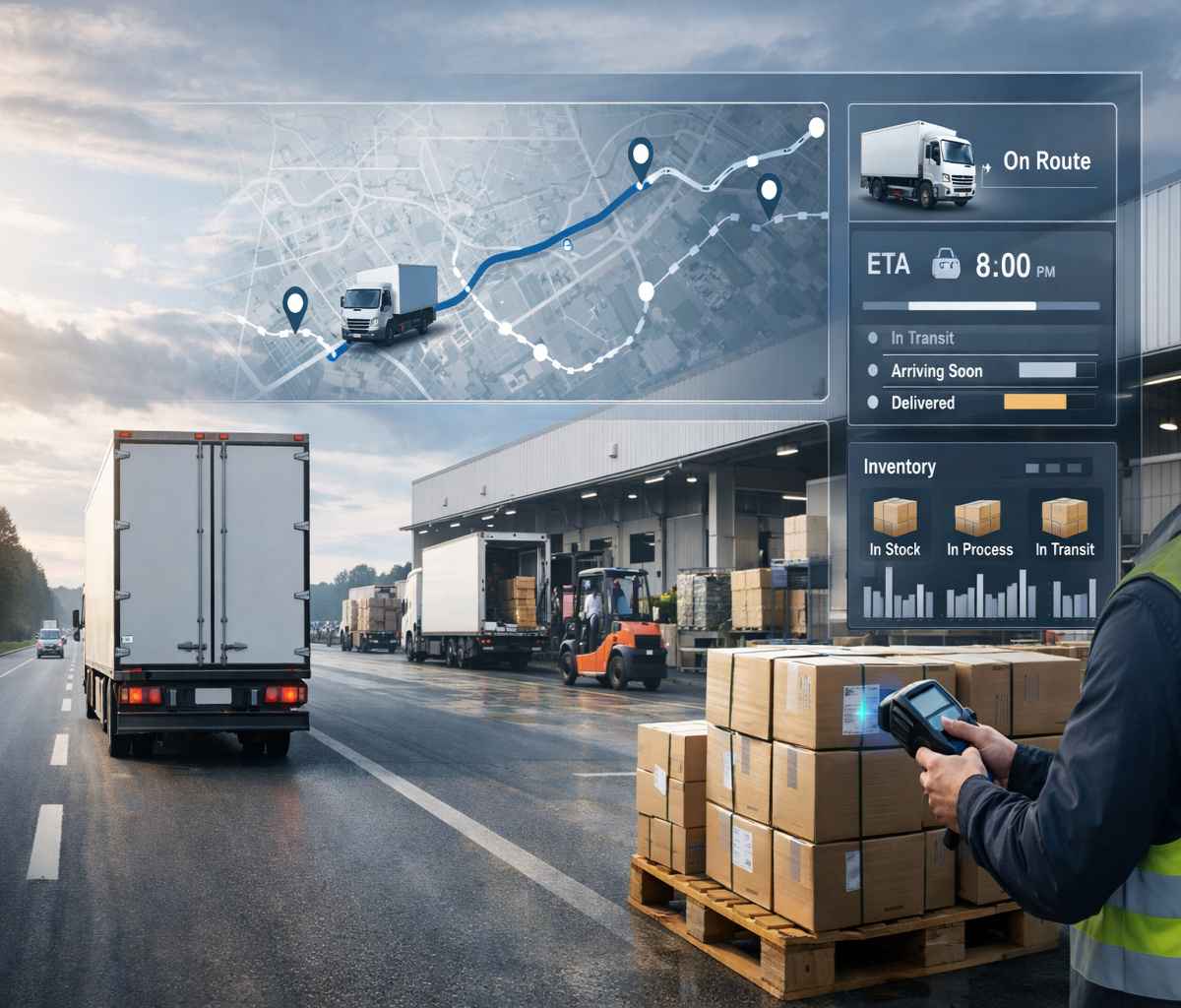
This article explains how real-time tracking works in practical terms, why it matters in modern distribution, and how businesses can use it without getting lost in buzzwords. It also connects back to the broader pillar article on what is one way that technology can improve the distribution of goods, because real-time visibility is not just one feature among many. In a lot of cases, it is the foundation that makes other distribution technology more effective.
What is real-time tracking in the distribution of goods?
Real-time tracking in the distribution of goods means using connected technology to monitor the location, status, and movement of products, vehicles, and inventory as events happen. Instead of waiting for delayed updates, businesses can access live or near-live information about where shipments are, when they are likely to arrive, whether routes are changing, and how inventory is moving through facilities.
That visibility can come from several tools working together. GPS systems help track delivery vehicles on the road. RFID and barcode systems help monitor products inside warehouses and across checkpoints. Telematics systems collect vehicle data such as route progress, idling time, or maintenance alerts. Cloud platforms bring all of that information together so managers, dispatchers, warehouse teams, and even customers can see the same updated picture.
In simple terms, real-time tracking helps businesses answer questions that used to take too long to resolve. Where is the shipment? Has it left the warehouse? Is the vehicle delayed? Was the order scanned correctly? Is the customer getting the right ETA? Those answers matter more than people sometimes realize.
Why real-time tracking matters
The biggest value of real-time tracking is not just that it shows movement on a screen. It gives operations teams a chance to act while there is still time to improve the outcome. That distinction matters. A late update only tells you what went wrong. A live update can help you do something about it.
For example, if a vehicle is stuck in traffic or diverted by bad weather, dispatchers can adjust the route, update the customer, shift another vehicle, or change warehouse priorities based on the delay. If a product is scanned into the wrong zone, warehouse staff can correct the error before it affects outbound orders. If inventory data changes quickly, sales and support teams are less likely to promise goods that are not really available.
This is one reason the topic deserves its own article instead of being reduced to a short paragraph in a broader logistics piece. Real-time tracking supports faster decisions, but it also supports calmer operations. People work better when they are not constantly guessing.
How real-time tracking works
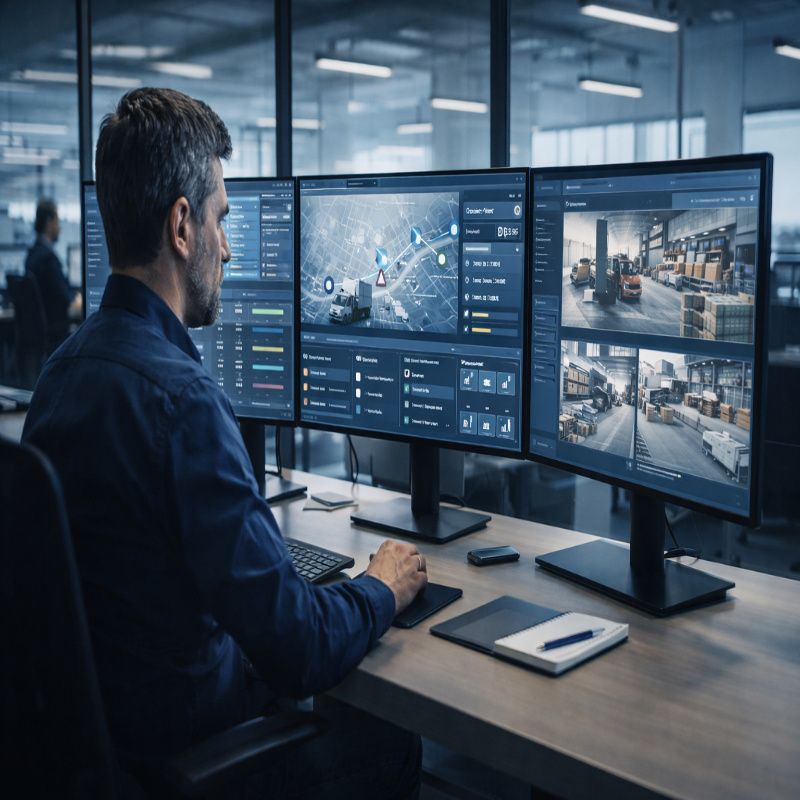
At a basic level, real-time tracking depends on data capture, data transmission, and data display. First, something in the system has to generate information. That might be a GPS device in a truck, an RFID tag on a pallet, a barcode scan at a warehouse station, or a telematics unit reporting speed and route behavior. Then that information is transmitted through a network to a central platform. Finally, the platform turns the raw data into something people can actually use, such as dashboards, mobile alerts, ETA updates, or exception notifications.
That process sounds technical, and yes, some parts of it are. But in daily operations, the outcome is fairly intuitive. Teams get a live view of goods in motion. They can see where things are slowing down, where handoffs happened, and where something no longer matches the plan. In a strong system, those alerts are not buried in spreadsheets or siloed software. They reach the people who need them quickly enough to make a difference.
The quality of the system depends a lot on integration. A GPS device on its own has value, but much more value appears when route data connects with dispatch software, inventory records, proof-of-delivery workflows, and customer notifications. That broader system is where distribution starts to feel coordinated instead of fragmented.
Core technologies behind real-time tracking in the distribution of goods
Several technologies usually work together to make real-time tracking useful:
- GPS tracking: Helps businesses monitor the location and movement of delivery vehicles, especially across regional and last-mile routes.
- RFID tags: Allow products, pallets, or containers to be identified and tracked as they move through checkpoints.
- Barcode scanning: Confirms movement events in warehouses, loading areas, and receiving stations with a lower cost setup than RFID in many operations.
- Telematics: Adds vehicle-level insight such as route behavior, driver patterns, fuel use, and maintenance alerts.
- Cloud-based dashboards: Bring together data from multiple sources so teams can monitor operations from one place.
- Mobile apps and alerts: Push updates to dispatchers, drivers, warehouse teams, customer service staff, and sometimes end customers.
Not every business needs all of these from day one. That is worth saying clearly. Some companies benefit from starting with barcode scanning and basic fleet tracking, then expanding as operations become more complex.
Benefits of real-time tracking for distribution teams
There are a lot of ways to describe the benefits, but most of them fall into a few practical categories: visibility, speed, accuracy, cost control, and customer experience. Those categories overlap, of course. Distribution problems rarely stay in one box for long.
Better shipment visibility
Real-time tracking gives managers and dispatchers a live view of where goods are in transit. That reduces the black holes that tend to appear between warehouse departure, carrier handoff, and final delivery. Instead of waiting for a manual check-in, teams can monitor progress continuously and respond faster when movement does not match the plan.
This is especially useful in operations with many moving parts — multiple warehouses, third-party logistics partners, regional hubs, or tight customer delivery windows. Once visibility improves, distribution becomes easier to manage because fewer decisions are based on stale information.
Faster response to delays
Delays are part of distribution. Traffic, weather, equipment issues, labor shortages, and route changes are not going away. What real-time tracking improves is the response window. A dispatcher who sees a problem early has more options than one who learns about it after the customer complains.
That early warning can lead to rerouting, schedule adjustments, labor reallocation, customer notifications, or updated delivery promises. None of those actions removes every disruption, but they reduce the damage and protect service reliability.
Improved inventory accuracy
Tracking is not only about trucks on the road. In warehouses and distribution centers, real-time scans and movement records help teams keep inventory data accurate as products are received, stored, picked, packed, and shipped. That accuracy matters because bad inventory data creates a long list of expensive problems: stockouts, mispicks, wasted labor, emergency transfers, and awkward customer conversations.
If this area is a priority for your content strategy, it connects naturally with the related article on warehouse automation in the distribution of goods, since warehouse systems and tracking tools often reinforce each other in daily operations.
Stronger customer communication
Customers do not expect perfection, at least not always. They do expect clarity. Real-time tracking helps businesses provide more accurate ETAs, status updates, and proof-of-delivery confirmations. That reduces uncertainty, which is often what frustrates customers most when orders are delayed.
It also reduces the burden on support teams. When customers can check live delivery status through a portal, app, or automated update, they do not need to call or email for basic information. That makes the whole experience feel more organized and more trustworthy.
Lower operating costs over time
Real-time tracking can help reduce unnecessary mileage, failed delivery attempts, avoidable labor waste, and emergency troubleshooting. Those savings do not always appear overnight. Sometimes they show up gradually as teams stop making as many reactive decisions. Over time, though, small improvements in visibility often lead to better route planning, fewer service issues, and stronger use of existing resources.
This is also where the connection to route optimization for the distribution of goods becomes important. Live tracking and route planning work best together. One shows what is happening now, and the other helps shape what should happen next.
Real-time tracking in warehouses
When people hear the phrase real-time tracking, they often think about delivery vehicles first. That makes sense, but warehouses are just as important. In many cases, distribution performance depends more on what happens inside the building than what happens on the road. If goods are scanned late, staged incorrectly, or picked from the wrong location, the shipment starts with a problem before the truck even leaves.
Real-time warehouse tracking helps reduce those errors by logging product movement at each stage. Items can be scanned at receiving, assigned to storage locations, confirmed during picking, checked again in packing, and validated before shipping. That creates a traceable record that helps businesses find where a delay or mistake actually started.
It also improves labor coordination. Warehouse supervisors can see where backlogs are building, which zones are falling behind, and where replenishment is needed. This is not flashy technology, exactly, but it is one of the most useful ways distribution teams create more stable workflows.
RFID vs barcode scanning
Both RFID and barcode scanning support real-time visibility, but they work a little differently. Barcode systems are often more affordable and straightforward, especially for businesses beginning to digitize warehouse operations. They usually require line-of-sight scanning, which means workers scan items at specific handling points.
RFID can go further in some environments because tags can be read automatically at a distance, depending on the setup. That can reduce manual scanning effort and improve speed in high-volume operations. Still, RFID is not automatically the better option for every business. Cost, infrastructure, accuracy needs, and product flow all matter. The better choice is the one that fits the operation well enough to be used consistently.
Real-time tracking on the road
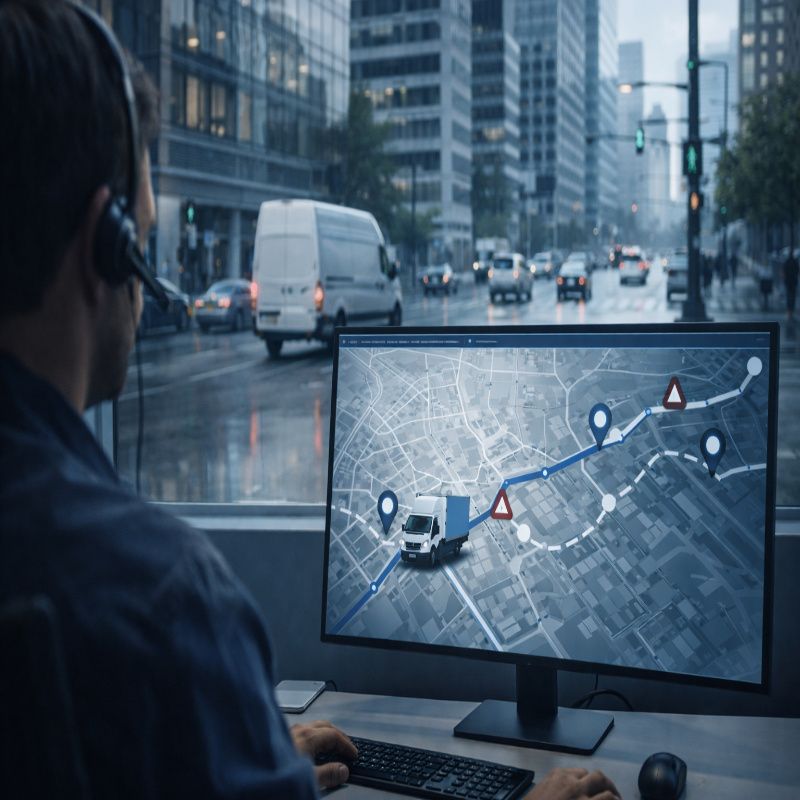
On the transportation side, real-time tracking gives dispatchers and fleet managers a live picture of vehicle movement, route progress, and delivery status. That is where GPS and telematics become especially useful. A company can see where each vehicle is, how far it has progressed, and whether it is likely to arrive on time.
That visibility becomes more valuable in last-mile delivery, where schedules are tight and customer expectations are high. If one stop takes longer than expected, the rest of the route may need to change. Without live tracking, those issues stay hidden until they create missed windows. With better tracking, dispatch teams can update plans while the route is still in motion.
There is also a safety and maintenance side to this. Telematics can help businesses monitor idling, speeding, harsh braking, and other vehicle conditions that affect fuel use, wear, and schedule reliability. So real-time tracking is not only about knowing where a truck is. It is also about understanding how that vehicle is performing in the context of the route.
Use cases across different industries
Real-time tracking in the distribution of goods matters across many industries, but the reasons vary a bit depending on what is being shipped. That is worth acknowledging because not all distribution systems face the same pressure points.
Ecommerce and retail
Ecommerce businesses often rely on real-time tracking to improve customer updates, manage fast order volumes, and reduce the “Where is my order?” problem. Retail operations use it to coordinate replenishment, reduce stock imbalances across locations, and improve delivery timing for stores or direct-to-consumer shipments.
Wholesale distribution
Wholesale distributors benefit from tracking because they usually move larger volumes across more locations and customer types. Live visibility helps them manage transfers, outbound shipments, delivery windows, and product allocation more effectively.
Food, healthcare, and sensitive goods
In sectors where timing and handling conditions matter a lot, real-time tracking becomes even more valuable. Some operations need location data plus condition monitoring such as temperature or tamper alerts. In those environments, delays are not just inconvenient. They can affect quality, compliance, or product usability.

Common challenges with real-time tracking
For all its advantages, real-time tracking is not automatically simple to implement. Some companies assume they can add a few tools and immediately gain full visibility. Usually it takes more work than that. Systems need to connect properly, teams need training, and the business needs clear rules about how tracking data should be used.
One common challenge is fragmented technology. A warehouse may use one platform, the transport team another, and customer support something else entirely. If those systems do not share updates well, the company still ends up with partial visibility. Another issue is data quality. If scans are skipped, devices fail, or updates lag, people lose trust in the system quickly.
There is also the human side. Staff may resist tools that feel intrusive, confusing, or badly introduced. That is understandable. Good adoption usually depends on explaining how the system helps daily work, not just how it helps management reports.
How to avoid poor implementation
Businesses usually get better results when they start with a clear operational pain point. Maybe missed delivery windows are the issue. Maybe it is inventory mismatch. Maybe it is poor communication between the warehouse and transport teams. Starting with the real bottleneck makes technology selection easier and gives the rollout a clearer purpose.
It also helps to phase implementation. A business might begin with route tracking and delivery status alerts, then expand into warehouse scans, telematics, and customer-facing visibility tools later. That slower approach can feel less exciting, perhaps, but it often works better in real operations because people have time to adapt.
How to choose the right real-time tracking setup
The right setup depends on business size, shipment volume, number of locations, delivery complexity, and budget. A smaller distributor may only need barcode-driven warehouse visibility and basic fleet GPS. A larger business with multiple facilities and carrier networks may need integrated dashboards, telematics, RFID, mobile driver tools, and customer notifications working together.
What matters most is fit. The best tracking system is not the one with the longest feature list. It is the one that helps the business act faster, communicate better, and trust its own operational data. That sounds obvious, but companies still get pulled toward overbuilt platforms that promise everything and complicate the basics.
A good evaluation process usually includes these questions:
- What specific distribution problem are we trying to solve first?
- Do we need warehouse tracking, vehicle tracking, or both?
- Will the system integrate with our inventory, dispatch, and customer tools?
- Can staff use it consistently without creating more friction?
- Will the data be accurate enough to support real decisions?
Why this cluster topic matters
Real-time tracking in the distribution of goods matters because visibility affects almost everything else in the distribution chain. When businesses can see what is happening while it is happening, they can respond faster, plan better, and reduce avoidable mistakes. That improvement may begin with tracking, but it quickly expands into routing, inventory management, labor efficiency, and customer trust.
That is also why this topic supports the broader pillar article on what is one way that technology can improve the distribution of goods. If the pillar explains the big picture, this cluster article explains one of the most important moving parts inside it. Real-time visibility is not the whole story, but it is often the point where better distribution really starts to become possible.
And in practical terms, that may be the most useful way to think about it. Real-time tracking is not just a digital extra. It is a way of reducing uncertainty across the movement of goods, which, in distribution, is often where the biggest gains begin.