
 Xbox Cloud Gaming Equirements: Internet, Devices, Controllers
  How to Delete Sent Messages on iPhone From Both Sides
  Real-Time Tracking in the Distribution of Goods
  Portable Monitor For Laptop Guide
  Optimizing Sales Prospecting with Modern Software Tools
  What Is One Way That Technology Can Improve The Distribution Of Goods?
  Xbox Cloud gaming: A Practical Guide For Real Life
  Game Pass vs PlayStation Plus: which is actually worth it?
  Macfox X1S installation guide: assembly, setup, and first ride checks
If you’ve been circling the idea of a macfox x1s, you’re probably in the same spot a lot of people end up in: you want that compact, moped-style e-bike look, you want something simple, and you don’t want to spend two grand just to find out you’re “not really an e-bike person.” This guide is meant to feel like the article I wish existed before buying—part review, part setup help, part real-life ownership notes.
I’ll be direct when something feels like a strength, and I’ll be just as direct when it feels like a tradeoff you should make with open eyes. That’s the only way these bikes make sense, honestly.
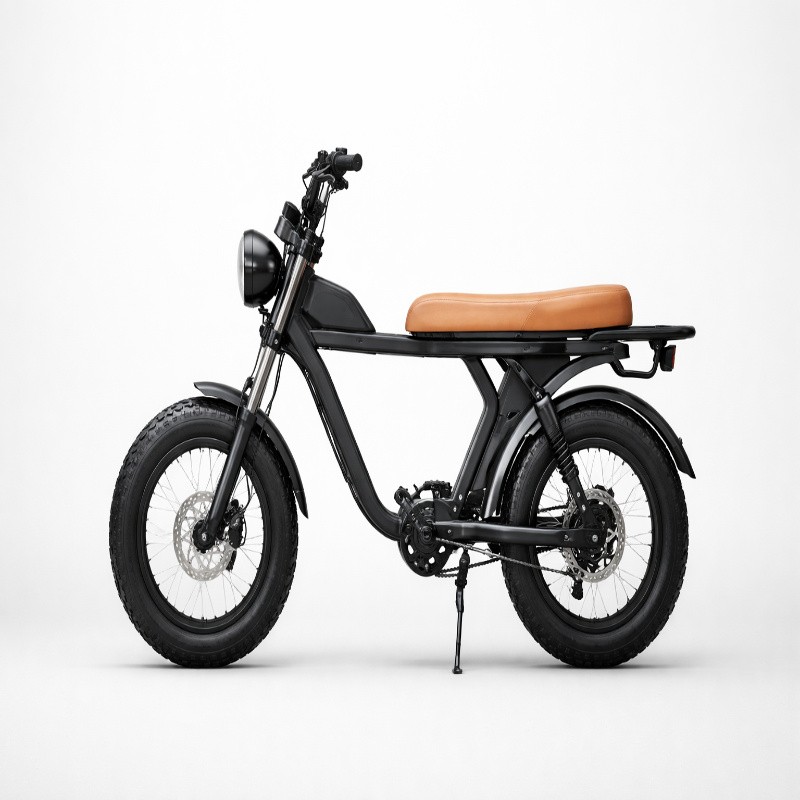
What the Macfox X1S is (in plain English)
The Macfox X1S is a moped-style, hardtail commuter e-bike with a steel frame, fat tires, front suspension, and simple single-speed gearing. Depending on where you look, you’ll see different “headline” speed and range claims, so I’m going to treat it like two things at once: (1) what the manufacturer currently lists, and (2) what an independent reviewer actually experienced in testing.
On Macfox’s product page, the X1S is listed with a 500Wh battery (48V 10.4Ah), a 500W motor with 750W peak, single-speed gearing, mechanical disc brakes, 20” x 4.0” tires, a 5–6 hour charge time, and a stated range of 28–56 miles, plus a listed top speed of 20 mph. webBikeWorld’s 2024 review describes the same general platform (500Wh battery under the seat, 500W rear hub motor), and reports a charge time of about 5–6 hours with roughly 38–50 miles of range in their use.
So yes, there’s a little tension in the numbers. It happens with e-bikes—sometimes it’s configuration, sometimes it’s marketing, sometimes it’s “best case vs normal life.”
Who the Macfox x1s is for (and who should skip it)
I think the best fit is a rider who wants a comfortable, stylish commuter e-bike, likes the minimal “less is more” approach, and doesn’t mind that this is an affordable, no-frills build rather than a premium one.If you’re attracted to the long moto-style seat and the simple controls, that’s not shallow—comfort and simplicity are big parts of whether you’ll ride a bike consistently.
On the other hand, if you’re the kind of person who wants top-tier documentation, near-perfect assembly experience, and customer support you can rely on without friction, you should pause and read the ownership section carefully. webBikeWorld specifically calls out concerns about the owner’s manual not matching the bike and later adds a blunt update criticizing customer service responsiveness and communication.
It’s also not the bike I’d pick for serious off-road riding. Even the independent review frames it as best for paved roads and light dirt paths because it doesn’t have additional suspension beyond the front fork and relies heavily on tire volume for comfort.
Macfox X1S specs that actually matter day-to-day
Specs are only useful if you tie them to outcomes. Here are the ones that change your experience the most, with a few “why it matters” notes I’d tell a friend.
Motor and power delivery
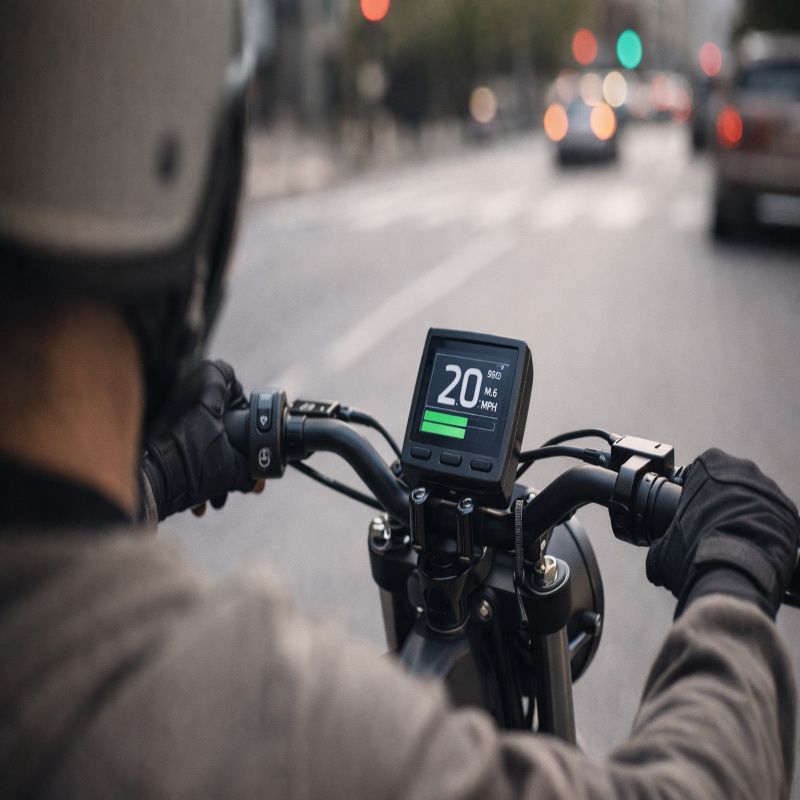
Macfox lists the X1S as a 500W motor with 750W peak. webBikeWorld also describes a 500W rear hub motor (750W peak) and notes it uses a twist throttle plus three pedal-assist levels (ECO, MID, HIGH) with cadence sensing and single-speed gearing.
That combination—throttle + cadence PAS + single-speed—tends to feel very “point and go.” It’s great when you want simplicity, but if you love fine control (or you’re picky about pedal feel), cadence sensors can feel a bit on/off compared to torque-sensing systems.
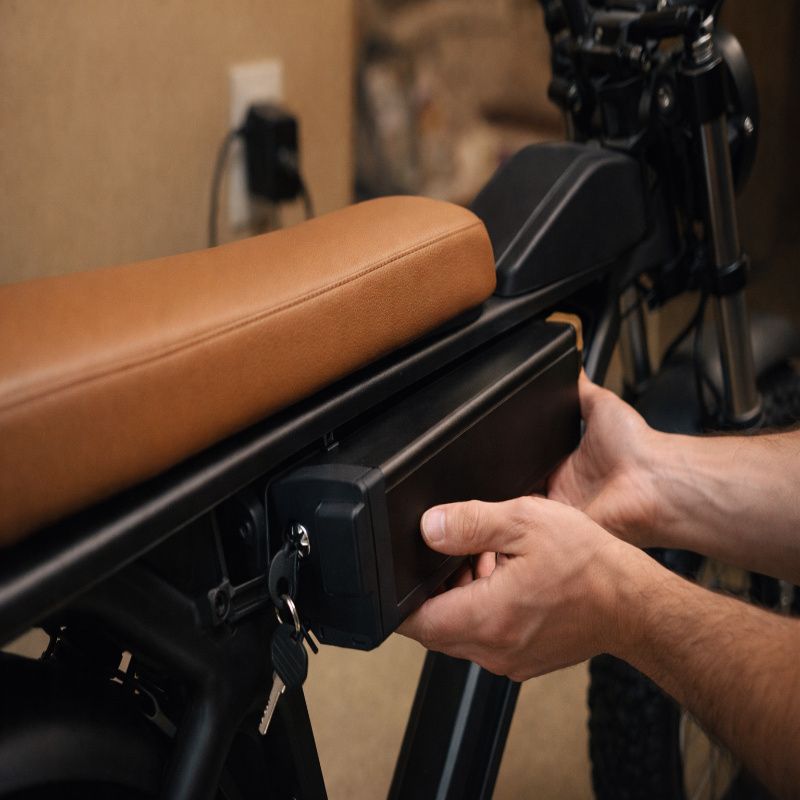
Battery size, charging, and removable design
The battery is listed as 500Wh (48V 10.4Ah) and the charge time is listed as 5–6 hours on the Macfox product page. webBikeWorld reports a similar 5–6 hour charge time and notes the battery is removable by lock and key, with a switch and even a USB port for charging small devices.]
Macfox also emphasizes battery “interface compatibility” for upgrades and claims that adding dual batteries doubles range, mentioning a “112 miles” figure when equipped with dual batteries. If you’re range-anxious, dual-battery setups can help, but I’d still treat any “max miles” number as a best-case scenario unless you know exactly the conditions used to reach it.
Weight and single-speed gearing (this is the part people gloss over)
Macfox lists the bike weight at 65 lbs and says it’s single-speed.webBikeWorld also lists it at 65 lbs (29 kg) and describes it as single-speed, calling it a simpler riding experience than typical 7-speed commuter e-bikes.
Here’s the practical point: a 65 lb, fat-tire, single-speed bike is not the thing you want to pedal like a normal bicycle if your battery is dead and you’re far from home. You can do it, sure. You just won’t enjoy it.
Macfox X1S range and speed: what’s realistic
Macfox’s current listing states a top speed of 20 mph and a range of 28–56 miles.webBikeWorld, in contrast, lists a top speed of 25 mph and says their charge delivered about 38–50 miles of range while describing higher advertised numbers as optimistic.
I’m not going to pretend that discrepancy doesn’t matter. It does. But it doesn’t automatically mean someone is “lying.” Sometimes it’s firmware, sometimes it’s a different revision, sometimes it’s just the difference between a legal/limited configuration and what the hardware is capable of in a different mode.
If you want a practical expectation that won’t disappoint you: treat ~38 miles as a conservative “still decent” day, and treat ~50 miles as an achievable upper end if you ride smoothly and don’t fight the bike with full throttle starts and high assist all the time. That range framing matches webBikeWorld’s experience and their caution about optimistic marketing estimates.
And if you’re thinking, “Okay, but what changes range the most?”—it’s the boring stuff: rider weight, tire pressure, wind, lots of stops, and how often you lean on the throttle instead of pedaling.
Ride feel: comfort, handling, and braking
The X1S’s comfort story is basically two things: a long moto-style seat and big-volume 20” tires. webBikeWorld specifically says the 24” moto-style seat feels very comfortable when paired with the 20” CST air tires.
Where it gets a little more complicated is suspension. webBikeWorld calls it best for paved roads and light dirt paths because it lacks additional suspension components. Macfox’s product page highlights “enhanced front suspension,” framing it as improved comfort and stability on uneven terrain.
I don’t see those ideas as totally incompatible. Front suspension and fat tires can make rough pavement feel friendlier, but a hardtail moped-style bike still isn’t going to feel like a true trail bike on chunky terrain.
On braking, both Macfox and webBikeWorld describe mechanical disc brakes. webBikeWorld notes the advantage is easier servicing (no brake bleeding), but they also mention experiencing vibration while braking with the front and suggest it could be improved by adjusting front brake pads.
Assembly and setup: do this so day one goes smoothly
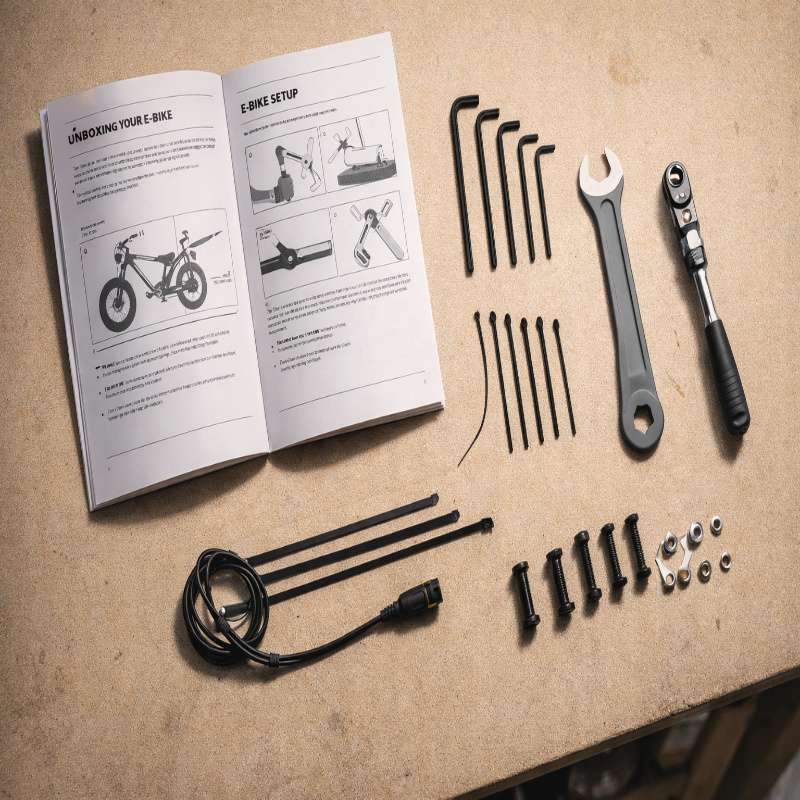
Most e-bikes arrive mostly assembled, but details matter. webBikeWorld says the X1S assembly was generally easy and took under 20 minutes, though they had extra time because the kickstand wasn’t attached and the manual/diagram didn’t match the actual bike well.
If you want a step-by-step assembly walkthrough that’s more “official,” you can also follow a dedicated Macfox X1S installation guide on TechLasers (cluster post). (You’ll still want to sanity-check each step against your exact bike revision.)
Macfox’s own product page also lists what’s in the box (bike, headlight, taillight, battery, charger, installation tools, user manual).That’s helpful because it gives you a quick “did they forget anything?” checklist before you throw away packaging.
My personal “first hour” checklist (the stuff that prevents regret)
I tend to be a little cautious here—maybe overly cautious—but e-bikes are heavy and fast enough that small setup mistakes can feel big. Based on common issues described in the independent review (manual mismatch, headlight connection difficulty, brake vibration), I’d do these checks before your first proper ride: (1) confirm all bolts are snug, (2) verify the front wheel is seated correctly, (3) spin wheels to check brake rub, (4) test throttle and PAS in a safe open space, (5) confirm lights are working, and (6) do a short brake bed-in.
webBikeWorld mentions they had trouble connecting the headlight wiring during assembly and later says they managed it by manipulating the connector to create room for a very snug connection. If you hit the same snag, don’t force it blindly—double-check alignment and connector orientation, and consider pausing to reference your documentation rather than turning it into a “strength contest.”
Troubleshooting: Macfox X1S error codes (and what to do first)
This is the part most “reviews” skip, but it’s the part owners search for at 11:30 PM when they’re stuck. Macfox publishes an X1S error code guide that defines codes and suggests basic troubleshooting steps.
If you want the full table and deeper “symptom first” explanations, see the TechLasers cluster post on Macfox X1S error codes.
A few common codes you’ll see mentioned
Macfox’s error-code guide includes communication-related codes (E001/E002), sensor-related codes like E004 (hall sensor), throttle-related E006, low-voltage related E009/E06, and E30 (communication error), along with suggested checks such as verifying wiring connections, checking battery state/charging, and replacing a component if needed.
I’ll add one practical note: if you just assembled the bike or installed a part and an error pops up immediately, it’s very often a connector seating issue rather than “a broken motor.” That doesn’t fix every case, but it’s a reasonable first thing to check before you spiral.
E-bike classes (and where the Macfox X1S fits)
E-bike classes can feel like bureaucracy until you realize they affect where you can ride and what’s considered legal on shared paths. Macfox’s class guide explains the basics: Class 1 is pedal-assist only up to 20 mph, Class 2 includes a throttle up to 20 mph, and Class 3 is pedal-assist up to 28 mph (typically without throttle in many jurisdictions).
If you want the simple version with examples and a short legality disclaimer, I’d keep it all in one place in a cluster post like Macfox X1S e-bike classes.
One caution: class definitions vary by location, and even the same bike model can be sold in different configurations. That’s part of why you’ll see different “top speed” descriptions across sources for the X1S.
Ownership notes: what it’s like after the novelty wears off
Let’s talk about what you live with. Some of it is nice and predictable—the comfortable seat, the straightforward controls, the simple drivetrain. Some of it is more uncertain, and it’s fair to say that out loud: webBikeWorld describes Macfox as a relatively unknown brand and says durability and longevity of the components haven’t been time tested.
Support is the other “ownership” variable. webBikeWorld includes an October 2024 update stating they experienced very poor customer service, with communication issues and lack of follow-through. That doesn’t guarantee you’ll have the same experience, but it’s relevant enough that I’d treat it as part of the purchase decision, not an afterthought.
How I’d reduce risk (without being dramatic)
If you buy an X1S, I’d document your unboxing, keep the packaging for at least a couple of weeks, and do a structured shakedown ride close to home first. I’d also test lights early, because the independent review specifically mentions headlight wiring connection trouble, and it’s easier to resolve while the bike is still “new” in your mind (and in your return window).
And yes—this is one of those mild contradictions—I’m comfortable recommending the bike to the right person, but I’m not comfortable pretending it’s a “set and forget” purchase the way some higher-end commuter brands can be. That’s the price/value tradeoff showing up in real life.
Pros and cons (the honest version)
Pros include the comfortable long seat and fat tires that make everyday cruising feel relaxed, plus the simple “no shifting” experience that some commuters genuinely prefer. The price positioning is also a major part of the appeal, with webBikeWorld calling it an affordable option compared to other moped-style brands.
Cons include the uncertainty around long-term durability for a lesser-known brand, and the very real possibility that assembly/documentation/support won’t feel polished.If you’re the kind of buyer who hates ambiguity, those negatives may outweigh the comfort and styling.
Should you buy the macfox x1s?
If you want a comfortable, stylish, simple commuter e-bike and you’re okay with a few rough edges—especially around documentation and potentially support—the macfox x1s can make sense. If you want higher confidence in long-term durability and a smoother ownership experience from day one, you may be happier spending more with a brand that has deeper support infrastructure and a longer track record.
If you do go for it, don’t skip setup care. Use the Macfox X1S installation guide and keep the Macfox X1S error codes page bookmarked—you’ll probably never need it, but you’ll be glad it’s there if you do.