
 Xbox Cloud Gaming Equirements: Internet, Devices, Controllers
  How to Delete Sent Messages on iPhone From Both Sides
  Real-Time Tracking in the Distribution of Goods
  Portable Monitor For Laptop Guide
  Optimizing Sales Prospecting with Modern Software Tools
  What Is One Way That Technology Can Improve The Distribution Of Goods?
  Xbox Cloud gaming: A Practical Guide For Real Life
  Game Pass vs PlayStation Plus: which is actually worth it?
  Macfox X1S installation guide: assembly, setup, and first ride checks
What’s actually known about Meta Quest 4
Let’s keep this tidy, but not artificially tidy. Two things can be true at once: Meta can be working on a “Quest 4” style device, and Meta can also change direction (or rename it) before anything ships. Reporting from December 2025 describes internal memos referencing a next-generation mainline headset for immersive gaming, and the coverage frames it as a “large upgrade” over Quest 3 while also calling out improved “unit economics.”
There’s also reporting that Meta delayed an ultralight headset concept that uses a separate compute/battery “puck,” with a target of the first half of 2027. That matters because it suggests Meta’s near-term priority could be form factor experiments and comfort, and that the “mainline” gaming device comes later.

The leaked memo thread (and why it keeps coming up)
The phrase you’ll see repeated is basically: “work has started” on the next mainline headset, it’s intended for immersive gaming, and it’s meant to be a meaningful leap from Quest 3. “Large upgrade” is vague, yes. But it’s still a stronger signal than pure speculation, because it implies there’s a real internal program with goals and timelines—even if those timelines are flexible.
The other recurring phrase, “improve unit economics,” is also doing a lot of work here. It doesn’t automatically mean “higher price.” It can mean cheaper manufacturing, fewer expensive components, better supply chain terms, or less aggressive discounting. But for shoppers, it’s fair to interpret it as: Meta is thinking harder about profit per unit than it did in the Quest 2 era. If that’s the direction, it’s worth reading the dedicated Meta Quest 4 price rumors guide, because that’s where this question really lands.
A quick reality check: plans move, names change
One reason “Meta Quest 4” rumors feel contradictory is that different sources may be talking about different devices. Some discussions focus on an ultralight design with an external puck, sometimes described as thinner, lighter, and potentially a new category rather than a traditional Quest. Android Central, for example, highlights rumors of a smaller/lighter design enabled by an external “puck,” plus eye/face tracking, and even speculation that it might not be called “Quest” at all.
That doesn’t automatically clash with a “Quest 4” story. It might just mean Meta is running multiple tracks: one pushing comfort and “wearability,” another pushing immersive gaming. Or it might mean the roadmap is being reshuffled. Both are plausible, and neither is something a buyer should treat as locked.
Meta Quest 4 release date rumors (what’s realistic in 2026)
People want a straight answer here. In practice, it’s a range. The reporting around the ultralight headset suggests first half of 2027 for that device, and coverage discussing the “mainline” gaming headset tends to talk about 2027 or 2028 rather than 2026.
So if you’re hoping for “Quest 4 this year,” it’s probably not the safest bet. Not impossible in the abstract, but it doesn’t match the reported direction of travel.
Is Meta Quest 4 coming in 2026?
If the question is “will Meta announce something XR-related in 2026?” that feels very possible. But if the question is “will Meta ship a clear, traditional Quest successor called Meta Quest 4 in 2026?” the more responsible stance is: don’t count on it.
Part of the confusion is that some rumor coverage points to “late 2026” for a lighter headset concept, while other reporting emphasizes the first-half-of-2027 target for the ultralight puck-style device. That’s close enough to create messy timelines, and far enough apart to matter when you’re deciding whether to buy hardware now.
Why the schedule stays fuzzy
Headsets are hard. They’re not like phones where you can often predict a yearly rhythm and minor upgrades. Comfort, thermals, battery life, optics, passthrough quality, tracking reliability—each of those can turn into a “ship it later” decision. Even the best-looking roadmap slide can crumble when a component or a manufacturing constraint doesn’t cooperate.
Also, Meta is clearly juggling multiple bets: smart glasses momentum, Horizon OS expansion, and mixed reality headsets with very different shapes and audiences. That’s exciting, but it’s not simple.
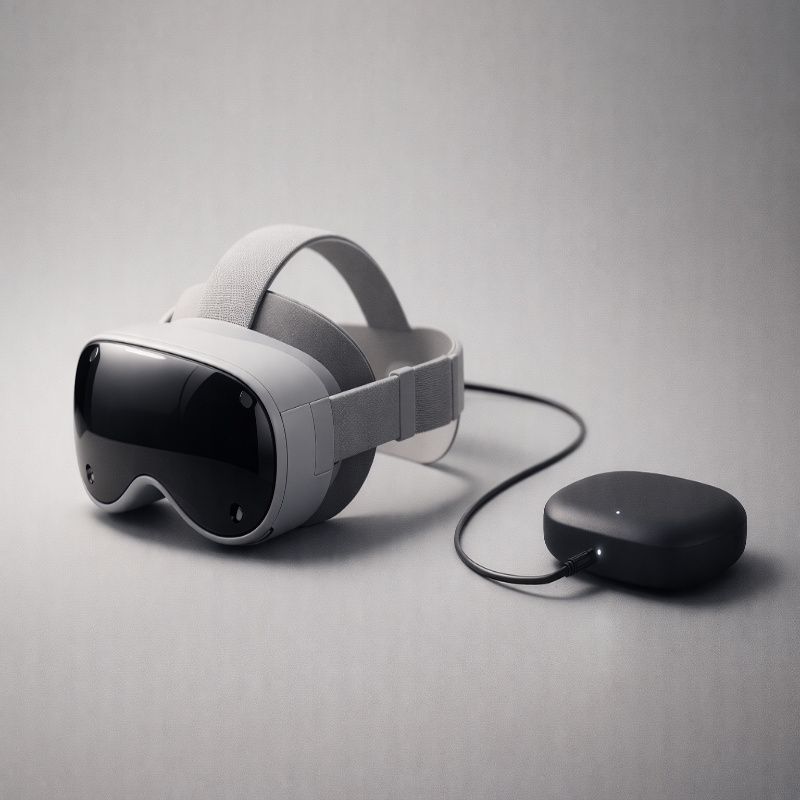
Meta Quest 4 specs: what a “large upgrade” could mean
Here’s where it’s tempting to get carried away, so this section is intentionally cautious. “Large upgrade” could mean raw performance. It could mean optical clarity. It could mean comfort and weight distribution. It could even mean a lot of small improvements that add up to a headset that feels less like gear and more like something you just put on.
Android Central’s rumor roundup points to possible eye and face tracking, plus a smaller/lighter design and a separated puck that holds compute and battery. That’s a very specific direction: make the headset lighter on your face, even if the system still weighs the same overall.
Comfort and “you can actually wear this” design
Comfort is the unglamorous part of VR that ends up deciding whether people use it. A headset can be powerful and still gather dust if it makes your face sore after 20 minutes. That’s why the puck idea keeps reappearing in rumors: shift some weight off the front of your head, and suddenly the session length changes.
It’s also why you’ll see speculation about controller-less experiences. Some rumors even suggest a headset that might ship without controllers. That’s… bold. And maybe not something gamers want. But it makes sense for productivity, virtual screens, or “sit down and work” use cases, where controllers can feel like unnecessary equipment.
Visual clarity, passthrough, and the stuff people notice immediately
When someone tries modern mixed reality for the first time, the reaction is often about passthrough: “Oh, I can actually see my room.” If Meta leans into that, you’d expect better cameras, better depth perception, and fewer “this feels like a noisy video feed” moments.
Android Central also spends time explaining pixels-per-degree (PPD) as a metric that can matter more than raw resolution, depending on lenses and field of view. That kind of detail is worth paying attention to because it’s easy for marketing to hide behind big resolution numbers that don’t translate to sharper visuals.
Performance: the upgrade people assume (but shouldn’t overpromise)
Yes, a “mainline” successor should be faster. But “faster” can mean different things in VR: smoother frame pacing, less thermal throttling, better hand tracking, more stable passthrough, quicker app loading. A chipset bump is one way to get there, but it’s not the only lever.
This is where a lot of online “spec leaks” go too far. If a rumor isn’t tied to a reliable report, it’s safer to treat it as a possibility, not a detail.
Meta Quest 4 price talk (and the “unit economics” clue)
Pricing is the part people argue about because it’s personal. Some people want Meta to keep subsidizing hardware to grow the market. Others want a premium model that finally stops feeling like a compromise. And Meta, realistically, wants both outcomes at once.
The reporting around internal memos uses language about improving unit economics. That reads like a company trying to sell a lot of devices without bleeding on each one. It doesn’t guarantee a price increase, but it does suggest Meta cares about margin structure more than it used to.
What “improve unit economics” might mean for buyers
There are a few plausible interpretations, and it’s okay to hold them simultaneously for now:
- Meta finds ways to reduce manufacturing cost while keeping pricing similar.
- Meta raises MSRP, but also improves comfort, optics, or features enough that people accept it.
- Meta keeps MSRP steady but reduces the frequency of big discounts and bundles.
Android Central also highlights a rumor pointing as high as $800 for a puck-style headset concept, plus the possibility it ships without controllers. That’s not “confirmed,” but it’s a good example of how different device categories could carry very different pricing.
If the question is “what should I budget?” the longer answer lives in the Meta Quest 4 price rumors cluster post, because it’s easier to talk through scenarios there without turning this pillar into pure finance speculation.

The messy rumor problem: “Quest 4 canceled” vs “Quest 4 is in the works”
If you’ve read around, you’ve probably seen both claims. Forbes ran a mid-2025 piece arguing that “Meta Quest 4” was “canceled” in favor of a new style of headset. Later reporting in late 2025 described internal memos suggesting work started on a next-generation mainline headset that would likely be Quest 4.
At first glance, that feels like a contradiction. In reality, it could be a timing issue (plans changed), a naming issue (the “new style” headset isn’t the “mainline” gaming headset), or just different visibility into different parts of the roadmap. This is why it’s smarter to focus on what the reports agree on: Meta is experimenting with lighter designs and is also planning a next-generation gaming-oriented headset, but the exact product names and launch order are still in flux.
Who is Meta Quest 4 really for?
Even though “Quest” is strongly associated with games, the broader XR market is pulling in two directions: deeper immersion for games and creators, and lighter, more wearable devices for screens, work, and communication.
UC Today frames the Quest 4 conversation through a workplace lens: mixed reality as a calmer workspace with virtual monitors, fewer distractions, and more practical daily use. It also emphasizes that Meta hasn’t confirmed a release date and that businesses are watching the roadmap while continuing pilots on current hardware.
In other words, even if you personally only care about games, it’s worth noticing that Meta’s incentives are bigger than gaming. The “mainline gaming” angle may still be central, but it probably won’t be the only story.
Three audience profiles (and a slightly imperfect answer for each)
- The “I want VR now” buyer: Waiting for Meta Quest 4 might turn into waiting through 2027. If VR fits your life today, buying a current headset and enjoying it isn’t a mistake.
- The “I upgrade rarely” buyer: If you keep hardware for years, waiting can make sense, especially if comfort and passthrough quality are your main pain points.
- The “I care about comfort more than anything” buyer: The puck-style rumors are the most interesting, even if they end up not being called “Quest.”
Still undecided? The comparison-style cluster post, should you wait for Meta Quest 4 or buy Quest 3, is written specifically for that indecisive middle zone people land in.
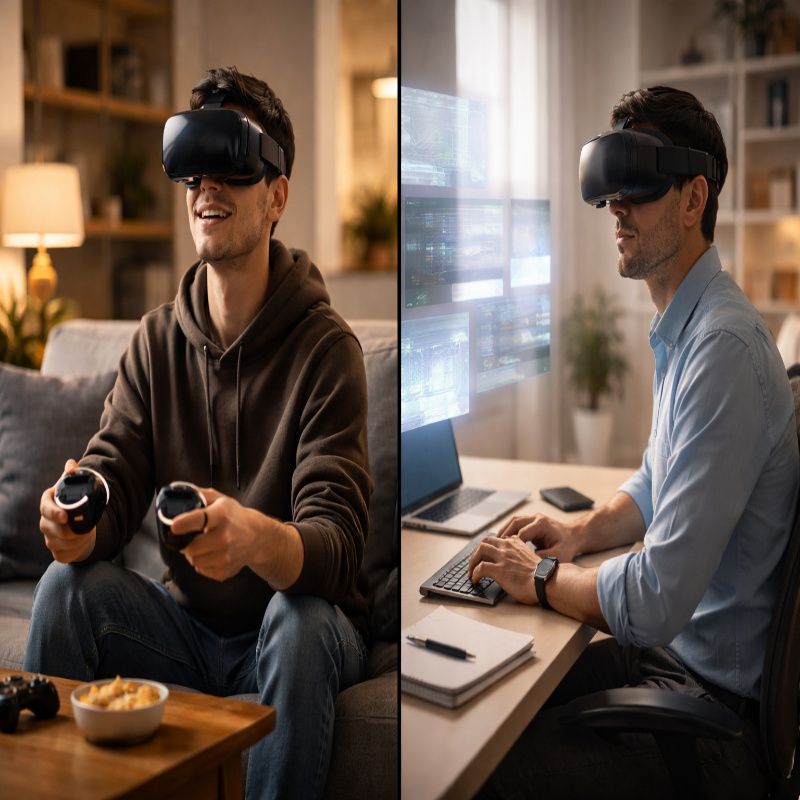
Should you wait for Meta Quest 4 or buy a headset in 2026?
This part is awkward because it depends on your tolerance for uncertainty. Some people enjoy waiting and tracking rumors like a hobby. Others just want something that works on the weekend. Neither is wrong.
If you’re buying primarily for gaming and fitness, a current Quest headset can be great right now, and the benefit of waiting is mostly about getting the next leap in comfort, visuals, and overall polish. But “next leap” is a promise the internet makes, not something the hardware world always delivers on schedule.
A practical decision checklist
- Time horizon: If you’d be unhappy buying now and seeing “Quest 4” six months later, waiting might protect your peace of mind—even if it costs you months of fun.
- Comfort sensitivity: If face pressure and heat bother you, it may be worth holding out for whatever Meta’s lighter-design track becomes.
- Use case clarity: If your real use is virtual screens and work, pay attention to the ultralight/puck style rumors, not just the “mainline gaming” narrative.
- Budget flexibility: If a higher price would force a compromise, it can be smarter to buy a good-value headset today instead of waiting for an unknown MSRP.
And, yes, this is slightly contradictory: it’s totally reasonable to wait, and it’s totally reasonable not to. That’s just how buying decisions feel when the product isn’t officially announced.
What to watch next (without doom-scrolling)
If Meta starts teasing new hardware, there are a few signals that matter more than breathless “leak” threads:
- Any official talk about comfort, weight, and how long you can wear it.
- Any mention of controller strategy (bundled, optional, or replaced by hands/EMG accessories).
- Any clear statement about target audience: gaming-first, productivity-first, or a split lineup.
- Any hints about pricing philosophy, especially if the company emphasizes sustainability and margins.
And if you’re mainly trying to time your purchase: keep an eye on the release-date cluster page. It’s easier to update one timeline-focused article than to constantly rewrite the whole pillar. Here it is again, naturally, where it belongs: Meta Quest 4 release date.
Conclusion
Meta Quest 4 is, at this point, best understood as a serious internal program that’s been described in reporting as a gaming-focused “mainline” headset and a “large upgrade” over Quest 3, with a not-so-subtle emphasis on improving “unit economics.” That’s real enough to take seriously, but still not real enough to plan around like a confirmed launch.
If you want VR in 2026, buying what exists now can be the happiest path. If you’re the type who only wants to buy once and keep it for years, waiting for Meta Quest 4 (or whatever Meta ends up calling its next generation) might be worth the patience—assuming you’re okay with the timeline staying a little blurry.